
Healthy Food in Institutions
Jessica, Director of Healthy Food in Institutions
jessica@nourishcolorado.org
Reach out for anything to do with the Local Food Program, Farm to Institution (primarily K12) efforts around the State, and connections to other people in Food Systems
Rebecca, Farm to Institution Program Manager
rebecca@nourishcolorado.org
Reach out for questions and/or technical assistance needs related to the Colorado Local Food Program, general Farm to Institution and institutional procurement-related resources and information, guidance on entering the K12 market, if an agricultural producer and/or food manufacturer, or interest in completing a dietetic internship rotation or volunteer role with the Healthy Food in Institutions team
Taylor, Culinary Programs Manager
taylor@nourishcolorado.org
Reach out for inquiries and resources for culinary trainings & resources and coordination between producers and institutions
Bradley, Farm to Institution Administrative Specialist
bradley@nourishcolorado.org
Local Procurement Colorado (LoProCO)
What We Do:
LoProCO is a farm-to-institution initiative implemented through varying grants and contracts all with the common goal of creating consistent and sustainable pathways for our institutional markets (primarily K12) to purchase, prepare, and promote local foods and for our producers and food hubs to access these market channels in a way that makes sense for their businesses.
LoProCO includes some of our major work, including Local Food Program and Regional Food System Partnership.
LoProCO Mission
Facilitate farm to school and institution by educating, connecting, and training partners with the information, contacts, and know-how they need to procure, store, prep, and serve fresh, healthy food. Our focus is on K12, with additional support for Early Childhood, Older Adults, and other institutions.
EDUCATE
Our food systems have evolved and gotten increasingly more complicated over time. There is a lot to know and even more to keep up with. LoProCO helps collaborators get a handle on how today’s food systems operate and how they can effectively work together to serve locally grown and raised, nutritious foods at Colorado’s schools and institutions.
Connect
While the notion of buying and eating locally is not a new one, the logistics of making a shift can seem overwhelming for institutional meal programs with an established way of doing things. Often times they don’t know where to start or who to reach out to for guidance and support. LoProCO removes these barriers by facilitating connections between food service directors, community partners, local food producers, regulatory experts, and other resources to help make the process seamless for all collaborators.
Train
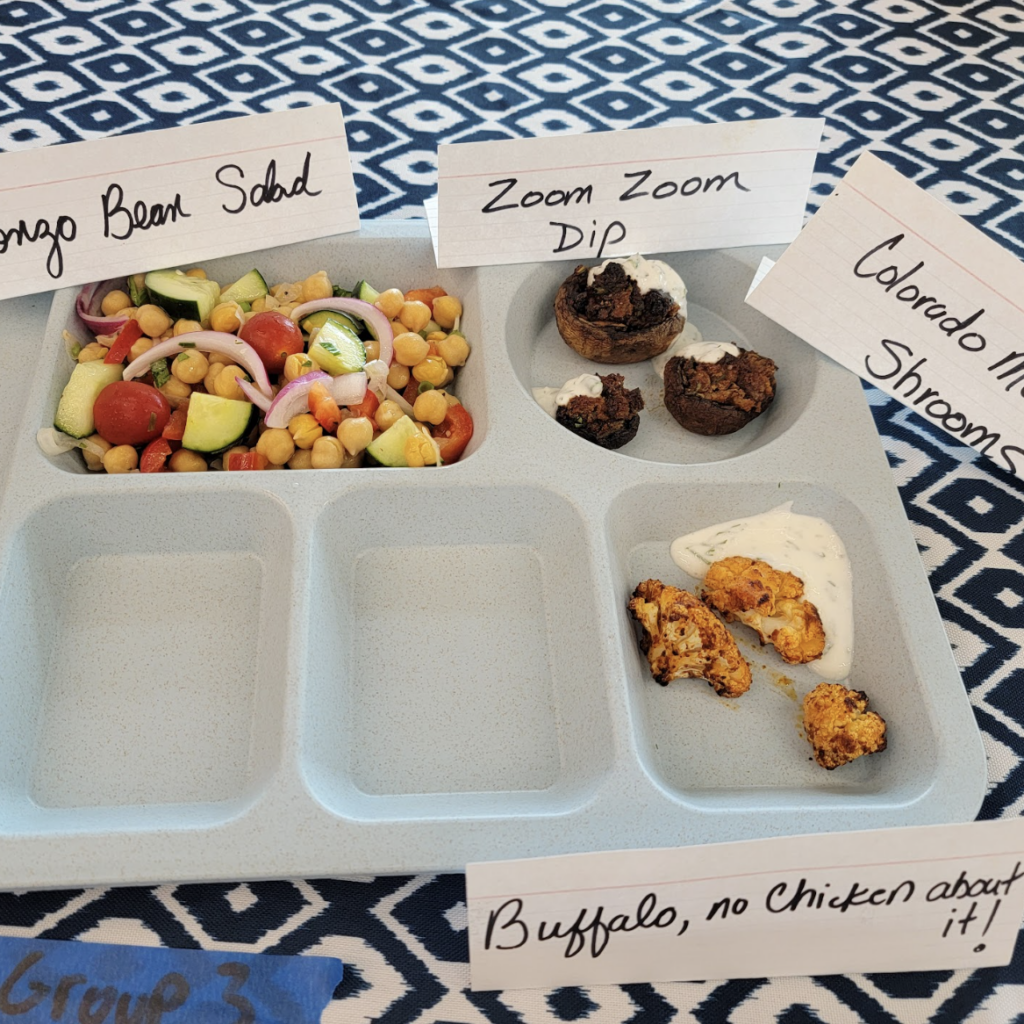
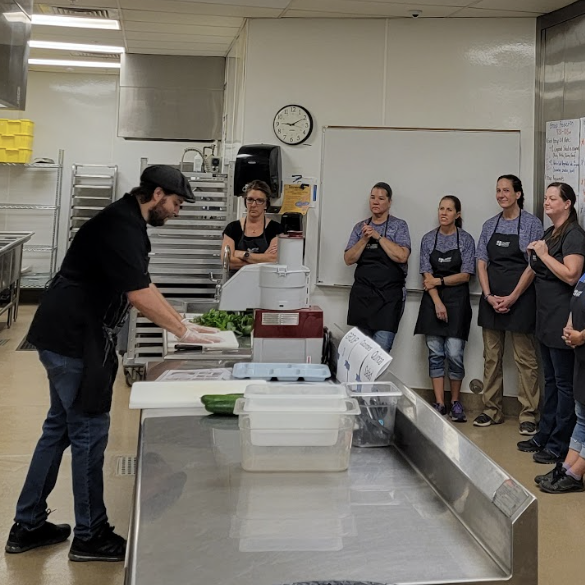
LoProCO hosts customized workshops to equip all partners with the tools, resources, and know-how to grow a nutritious food environment for children. We cover issues like regulatory compliance, safety, and school menu planning. We also run culinary trainings for kitchen leaders to help them adapt to changes local food sourcing may necessitate. These workshops are vital not only for training, but for in-person connections. “Speed dating” sessions give individual producers and food service directors the chance to meet face-to-face and forge personal relationships.
ADVOCATE
Policy plays a vital role in supporting LoProCO and making the vision of farm to school and institution a larger reality in Colorado. Recent ballot measures that we have led and/or supported have ensured access to free, nutritious meals made with quality ingredients for all students in public schools, have increased money for schools to buy Colorado-grown, raised, and processed products, and have supported partnerships that connect public and private resources to plan and develop local or regional food systems to strengthen viability and resilience of regional food economies through collaboration and coordination.

Regional Food Systems Partnership
This 3 year Federal Grant from the Agricultural Marketing Services division at USDA has us focusing on 2 core projects through September 2025.
Project One
Support rural southeast Colorado producers, institutions, rural grocers, and local partners with the training, technical assistance, resource connection, and networking opportunities to increase investment and ownership over the process of making farm-to-institution the norm in their region. Along with hosting regional workshops, cohort members receive additional support with achieving their goals through customized culinary training workshops, farm food safety planning, grant applications, and more. This project is also piloting a formal Regional Farm to Institution bid with the goal of increasing purchasing power and creating consistency for producers and food hubs in the region.
Project Two
Lead and facilitate conversations and research projects with State Agencies, COFSAC, CSU, local nonprofits, institutional buyers, producers and food hubs, and more around the systems and coordination needed at a Statewide level to foster strengthened local and regional supply chains, producer technical assistance, and support for institutions looking to procure and prepare local foods.
How We Do It:
Project One: Regional workshops focused on the process of making Farm to Institution the norm. Each workshop building upon the next with multiple touch points in between workshops to support cohort members with implementing their action plans.
Project Two: Lead conversations and convenings with key stakeholders around the State to push for more coordination and streamlining of the varying programs, evaluative components, communication methods, and technical assistance offerings – ultimately easing pain points local producers have when accessing institutional wholesale markets and collecting consistent purchasing data from institutions to better understand the “flow of money” from Farm to Loading Dock.
Primary Partners:
Colorado State University, Colorado Department of Education Office of School Nutrition, Colorado Department of Public Health and Environment Division of Environmental Health and Sustainability, Colorado Department of Human Services Colorado Department of Agriculture,
Colorado Food Systems Advisory Council, school meal programs, older adult meal programs, childcare centers, rural grocers, food hubs, distributors, ranchers, farmers, local non-profits, and local food business incubators.
Local Food Program
What We Do:
We are contracted with CDE through Sept 2026 as the Training and Technical Assistance Provider for the Local Food Program. We support the participating providers with the skills and connections they need to purchase local foods, prepare meals using local foods, and promoting their efforts. We also provide limited support to producers, food hubs, and distributors on navigating and connecting to school market channels.
How We Do It:
We create direct relationships with each participating provider, do a needs assessment, and identify opportunities to support them within the budget we have available. This can look like connecting them to local farmers and food hubs, providing customized staff trainings, supporting with menu planning, the procurement process, student engagement and more. We also connect with producers, food hubs, and local food business and help them navigate the school procurement process while creating strategic connections to varying schools.
Primary Partners:
Colorado Department of Education, Participating Providers (K12 Schools), Local Farmers, Ranchers, Food Hubs, Distributors, local non-profits and community partners.
For a visual of how the program works across partners, a program contact list, and a map of participating providers, view our LFP flow chart. Check out our infographics to see Year 1 New Providers Baseline Data, Year 1 Cohort Grant Expenditures, Year 2 New Providers Baseline Data, and Year 2 Returning Providers Comparison.
0
Participating providers in grant year ’21-’22 representing 92K students
$
0
M
Spent in total across providers on local foods equalling 3X the given allotment for ’21-’22
0
%
Of produce spending went to procuring local vegetables, with 53% processed in the form of carrots
0
Total new providers participating in grant year ’22-’23
0
Out of 8 providers have knowledge of local/regional foods but want to learn more, and already serve some local items (32 different items) but want to serve them daily or weekly
0
Out of 8 providers want more training on local food procurement & additional culinary skills support
0
Out of 16 providers returned from the ’21-’22 program for grant year ’22-’23
0
%
Of returning providers have confidence in knowledge of local foods, with 5 of the 12 growing school gardens
0
%
Of returning providers want to serve a local item daily or weekly (40 different items currently reported) and want more training on local food procurement to help achieve this
Building and Strengthening Sustainable Value Chains
This is a multi-year Federal Grant from the Agricultural Marketing Services division at USDA, funded through 2027.
What We Do:
Strengthen collaboration among small and mid-sized producers, food hubs, and incubators across Colorado to support sustainable regional systems through aggregating, processing, and distributing local food to institutions and small retailers. This work expands on the Colorado Farm to Loading Dock Assessment Report and builds upon Nourish Colorado’s Regional Food Systems Partnership project.
How We Do It:
Through thoughtful market analysis research, data collection, and partner collaboration, we identified the top requested local, raw/whole food and the top requested locally-sourced, value-added food among institutions, retailers, and food hubs in Colorado.
For the top raw/whole food items: We connect producers, food hubs, and local food businesses with institutional buyers to integrate these products into their meal programs. Additionally, we will develop and share recipes and culinary techniques utilizing these raw/whole products.
For the top locally-sourced, value-added products: We joined forces with various partners and community organizations to launch a Reverse Pitch Competition to onboard a Colorado-based entrepreneur to own this product development. We, along with our partners, provide this entrepreneur with in-kind support, connections, networking, and recipe development support while they coordinate the sourcing, production, packaging, and distribution of the product.
Primary Partners:
Colorado State University, Kitchen Sync Strategies, Ogallala Commons, Pueblo Food Project, Valley Roots Food Hub, Blue Ribbon Processing, Naturally Colorado, school meal programs, older adult meal programs, rural grocers, food hubs, distributors, ranchers, farmers, local and statewide non-profits, local food business incubators, and local food entrepreneurs.
Contracted Services
What We Do:
We offer contracted services to support institutional meal providers, primarily K12 operators with customized trainings to support their operations. This ranges from knife skills training, recipe development, food safety, leadership development, kitchen facility assessments, and so much more.
How We Do It:
You can fill out the form to the right to request an inquiry call. After that we develop a budget based on your needs and come to an agreement. We then deliver a high-quality training to your team that meets professional development requirements while also giving them the tools and resources they need to feel confident in their roles and the overall goals of your meal program.
Primary Partners:
We have held contracts with our Department of Education (K12) and our Department of Public Health and Environment (Early Care). Individual contracts are mostly K12 schools although we have done some smaller contracted trainings for Older Adult Meal Programs and local non-profits or extension offices.
Thank you for your passion and vision! It was so impactful to be in a room with so many different “players” who are necessary for these systemic changes.
Community Leader Workshop Participant
As a student I was nervous to come but I genuinely have learned an incredible amount whether that being in the kitchen or leaderships skills.
Student Workshop Participant
I think team Nourish is the best and I think they are already doing such a terrific job! I learn so much from them every time I see them and go to their workshops. Cant wait to go to another one soon!
Food Service Director Workshop Participant
That was a wonderful experience, thank you Chef Jessica and team for bringing fantastic energy, nourishing all of us, the kids, growers, farmers, educators and all the amazing spirits see y'all in a few seasons.
Agricultural Producer Workshop Participant